
When an Event Needs to Feel Like a World of Its Own
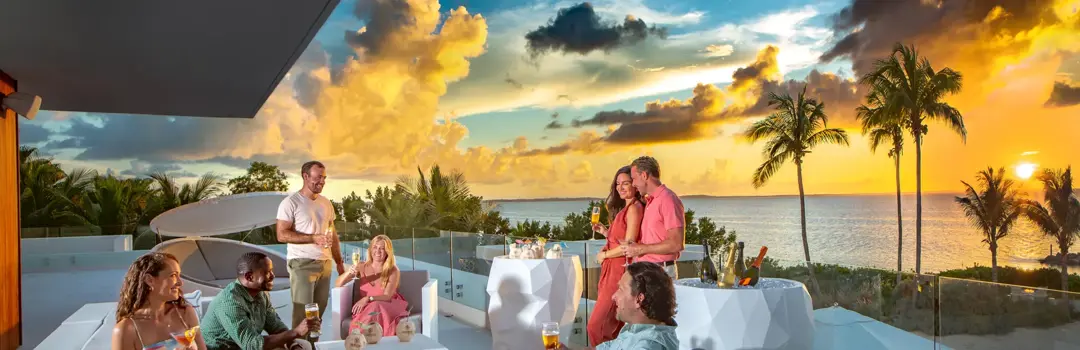
At a certain level, hosting stops being about celebration and starts being about signal.
Not spectacle, not scale, but taste—the kind that doesn’t need to explain itself.
Renowned architect Peter Zumthor, whose work is widely regarded for its emotional restraint and sensory depth, has long argued that meaningful spaces don’t announce themselves. They reveal themselves slowly, through atmosphere and feeling. That same principle applies to private events at the highest level. When something is truly well chosen, it doesn’t perform. It just works.
This is the threshold where expectations change: guests are looking beyond being entertained to being considered.
Why So Many High-End Events Still Fall Flat
Many private events look exceptional on paper. Renowned venues. Extensive planning. Impeccable detail. And yet, once guests arrive, the experience feels oddly familiar—crowded, managed, slightly overdetermined.
People enjoy themselves, but nothing quite lands. Nothing feels rare.
The issue usually isn’t investment, but environment.
Hospitality leader Horst Schulze, former president and COO of The Ritz-Carlton Hotel Company, believes true excellence in service comes from removing friction—so guests feel at ease without ever seeing the machinery behind the experience. When a space is designed for throughput, visibility, or operational efficiency, that friction never fully disappears, no matter how refined the setting.
Guests sense it immediately. They move through the experience instead of settling into it.
Environment Shapes Behavior—Whether You Plan for It or Not
Architects, designers, and behavioral researchers have been saying versions of the same thing for decades: people respond to space before they respond to programming.
Truly memorable private events don’t feel like events at all. They feel like stepping into a self-contained world, where outside noise falls away and time stretches naturally. Conversation deepens. Meals run long. Guests stay present because nothing is competing for their attention.
Privacy is central to this shift, not as a luxury add-on, but as a prerequisite. When guests know the environment is entirely theirs—no strangers passing through, no shared walls, no parallel agendas—they relax faster. The atmosphere moves from polite to personal.
That doesn’t happen by accident. It’s designed.
Scale Without Spectacle
Scale matters, but not in the way most venues interpret it.
Large ballrooms and resorts are optimized for movement and management. Even exquisitely designed ones struggle to create cohesion for private gatherings. Guests are subtly directed—through lobbies, schedules, and transitions—rather than allowed to inhabit the space.
A large private villa operates differently. Shared living areas replace public zones. Long tables replace seating charts. Guests move organically, without instruction. The experience feels fluid rather than staged.
Event designers often describe this as the difference between hosting people and giving people a place to be. One invites performance. The other invites presence.
Why the Most Memorable Moments Can’t Be Programmed
The moments people remember most are rarely the ones on the schedule.
- Morning light in the right room.
- A conversation that deepens because no one needs the table.
- A quiet corner where laughter carries without interruption.
These moments can’t be forced—but they can be anticipated.
Leadership scholar Warren Bennis, whose work shaped modern thinking around leadership and organizational behavior, wrote at length about mastering your context. That applies just as well to hosting, and in many ways, hosting is leadership in action. When the context is right, people show up differently. The environment does the work, so the host doesn’t have to.
A Higher Standard for Private Events
Of course, every veteran host knows the ironic truth: giving the gift of spontaneous joy requires an enormous amount of experienced planning.
The most effective hosts understand this instinctively. They focus less on managing the experience and more on choosing the right conditions for it to unfold. They prioritize privacy, pacing, and atmosphere over novelty or scale.
At Beyond Luxury, this philosophy informs how we think about private events—not as productions to be staged, but as worlds to be built, quietly and intentionally, around the people who matter most. We know that the events that endure aren’t the ones that tried the hardest.
They’re the ones that felt spontaneous.